
|
|
|
|
▶ The TRAP project has kicked off strongly! |
|
|
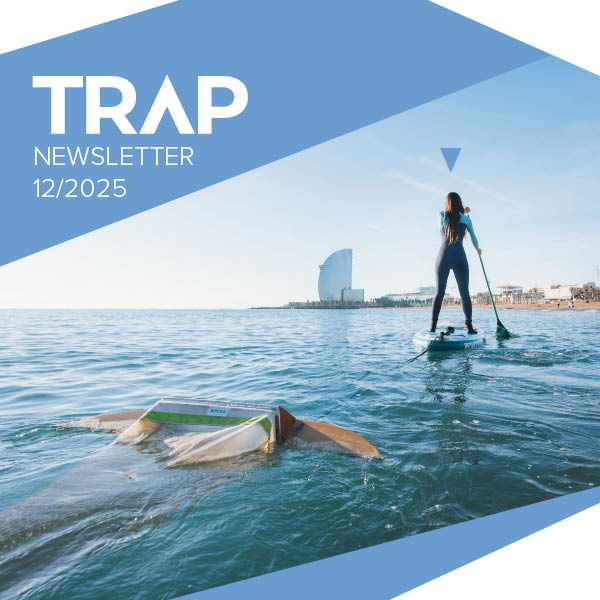
Plastics are increasingly present in seas and oceans around the world. The Mediterranean, a semi-enclosed basin, is particularly vulnerable: it accumulates large quantities of waste, especially plastics, originating from land, threatening biodiversity and marine ecosystems. In 2025, the University of Barcelona, the Polytechnic University of Catalonia and Plastic at Sea launched the TRAP project (Participatory strategies for managing cross-border coastal plastic pollution), a citizen science initiative aimed at understanding the origin and final destination of marine litter and contributing to improved conservation strategies for the marine environment in the Western Mediterranean. The project takes place along the Catalan coast, between the Têt estuary in the Eastern Pyrenees and the Ebro Delta in Montsià, with the support of the Pyrenees-Mediterranean Euroregion and the INTERREG POCTEFA program.
|

|
|
▶ What is the scientific principle behind TRAP? |
|
Citizen science lies at the heart of the TRAP project. Stakeholders from sports, social and environmental sectors on both sides of the Pyrenees actively participate in the scientific research. This collaboration makes it possible to sample marine litter (microplastics and macro-waste) with high geographical and temporal resolution, collecting data from rivers, beaches, the sea surface, and urban discharges across 6 key sites. The application of numerical models will help understand the amount of waste that enters these areas, how it disperses, and especially where it accumulates. The ultimate goal? To develop a prediction tool enabling environmental managers to implement local and regional policy actions to mitigate the impact of plastics on the marine environment. |
|
|
▶ Who participates? |
Canet-en-Roussillon • Les Micocouliers ESAT APAJH in Sorède, an association supporting people with disabilities. • ABSC 66, the Association of Catalan bodyboarders, paddlers and surfers. Banyuls-sur-Mer • Mimi Beach Club, rental of surfboards, kayaks and pedal boats. • Aviron Banyulenc, a traditional fixed-seat Catalan rowing club. Llançà • Som Mar, an association working to restore a relationship of love and respect for the sea. • IAEDEN–Salvem l’Empordà, a nature conservation institution of Alt Empordà, partnering with Som Mar. L’Escala • Fundació Alive, an organisation promoting the conservation and management of natural habitats and their biodiversity, in collaboration with Club Nàutic l’Escala, a sports association promoting nautical activities. • Som Mar, an association working to restore a relationship of love and respect for the sea. Barcelona • Surfrider Foundation, an organisation dedicated to protecting and enhancing oceans, especially regarding water quality and marine debris. • Undergraduate students in Marine Sciences at the University of Barcelona, through the Marine Geosciences Gmar group. Tarragona • GoodKarma Projects, an organisation focused on environmental education and awareness projects. • Reial Club Nàutic Tarragona, a historic club promoting nautical sports and encouraging knowledge and respect for the sea. In addition to these locations, we continue sampling for the Surfing for Science project in Barcelona (with Surfrider and Anywhere Water Sports), in Premià (with Rem Premià), in Torredembarra (with the Associació de Rem Vogadors Baix a Mar), in Ibiza (with Ibiza & Formentera Preservation and Es Nàutic de Sant Antoni de Portmany), and soon in locations in the Valencian Community! |
|
▶ What have we done so far? |
| The first months have been intense! Here are some highlights: “Plastic Researchers” in Banyuls-sur-Mer, May 2025. 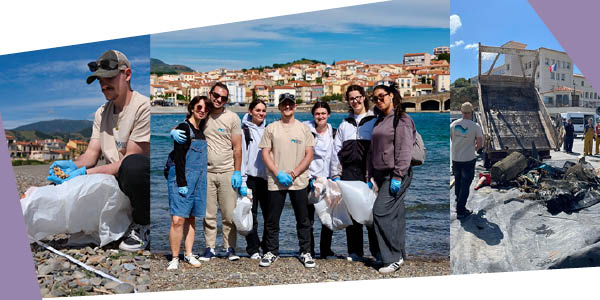 The town of Banyuls-sur-Mer is emerging as an open-air laboratory for the fight against plastic pollution in the Mediterranean. The “Plastic Researchers” operation, organised by Plastic At Sea as part of the TRAP project, in collaboration with the town council and the Oceanological Observatory of Banyuls, mobilised researchers, citizens and many local associations to collect, sort and analyse marine litter in the streets, squares, beaches and along the coastline. The aim? To better understand the origin, nature and impact of plastic waste in the marine environment, raise citizens’ awareness of biodiversity conservation, and support the town council in decision-making, implementing remediation actions and assessing their effectiveness. More than 100 people took part in this edition, demonstrating great enthusiasm for this unique initiative. The data collected contributes to the development of local and regional public policies. The results of the “Plastic Researchers” operation were presented in a poster entitled “Plastics in the city: spatial and temporal variation of urban litter in a coastal town of France” at the One Ocean Science Congress, held from 3 to 6 June 2025 and organised by the United Nations to provide heads of state, governments and society as a whole with comprehensive scientific insights into the state of the Ocean and its future outlook. The poster is available here. https://meetingorganizer.copernicus.org/OOS2025/OOS2025-1366.html |
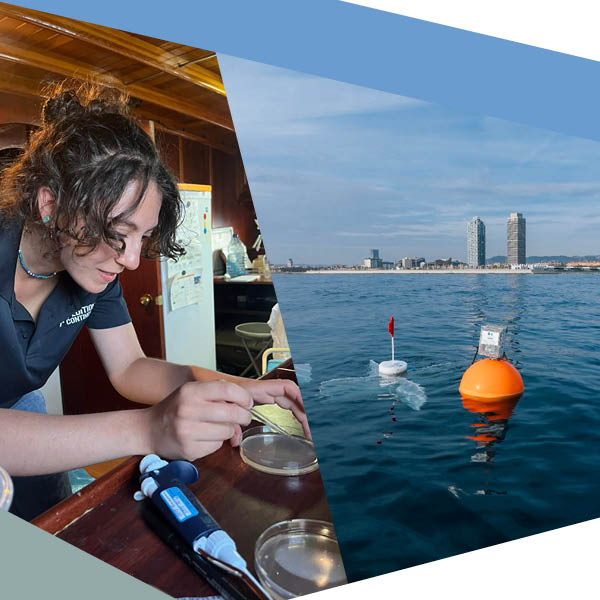
Blue Expedition of the NGO Expédition 7e Continent, July 2025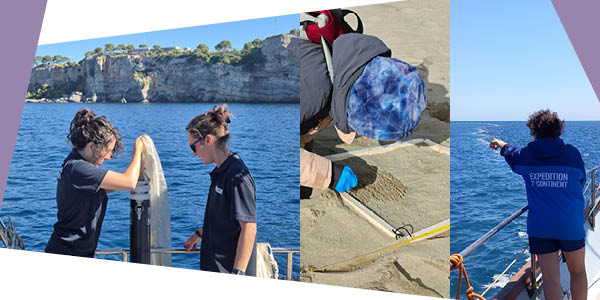 This expedition travels across the oceans to study and help prevent plastic pollution. It features an onboard laboratory to analyse samples of plastic waste. On board, Laura Migliorato, researcher at the University of Barcelona, studied the bacterial communities associated with plastics using culture-based methods to determine whether plastics found in the environment can carry potentially pathogenic bacteria. |
Harvest Festival in Banyuls-sur-Mer, October 2025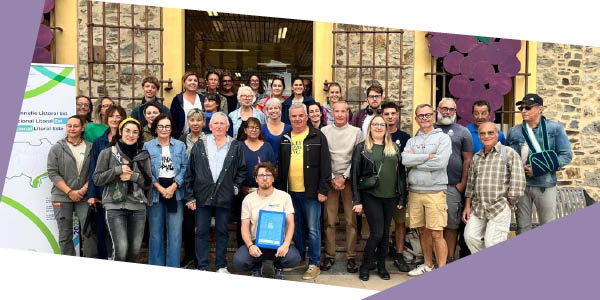 The 30th edition of the Harvest Festival, the most important celebration of the end of the grape harvest in Banyuls and Collioure, once again lit up the city, showcasing the region, its wines and Catalan life through concerts, theatre, traditions and local flavours. But after the festivities, nature must reclaim its place. The company Plastic At Sea implemented a rigorous protocol to analyse the nature, size and origin of plastic waste washed ashore after thousands of visitors and before municipal cleaning services intervened. By integrating citizen science into this festive event, Banyuls demonstrates that it is possible to combine winemaking tradition with environmental protection while raising awareness among future generations. |
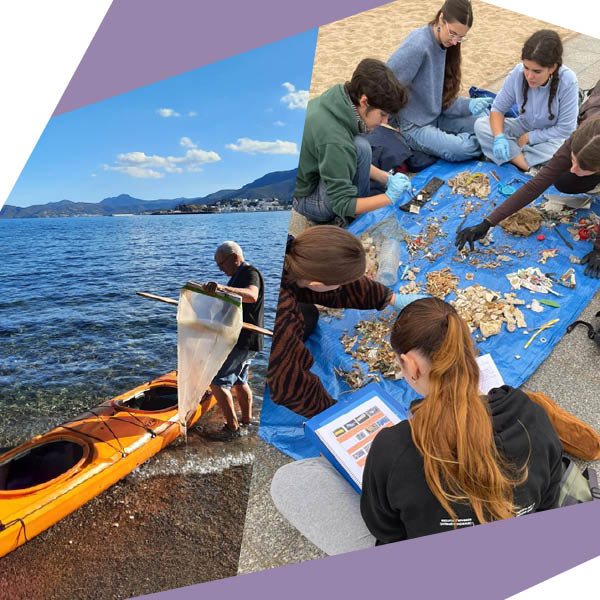
“Let’s Clean Europe” event, October 2025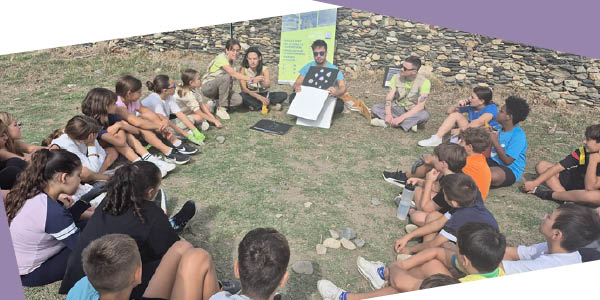 This is a joint action carried out across Europe to raise awareness about the amount of waste we carelessly discard in nature, and to promote awareness-raising activities through waste collection. Researchers and technicians from the TRAP project took part in activities held simultaneously in Catalonia (Cap de Creus Natural Park), the Balearic Islands (Mondragó Natural Park) and Occitania (Petit Travers beach). This initiative, promoted by the Euroregion Pyrenees-Mediterranean, mobilised more than 200 students to collect marine litter, raise awareness of its effects, and promote sustainable consumption habits. |
Collaboration with the Barcelona College of Nurses for an awareness campaign on microplastics and human health, October–November 2025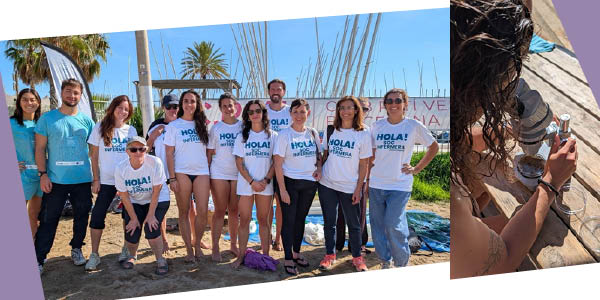 The COIB Projects Department organised a conference focusing on the impact of microplastics on planetary and human health. These meetings brought together leading experts in marine sciences, environmental health, biomedical research and social innovation to analyse the risks associated with micro- and nanoplastics, their effects on ecosystems and human health, and emerging policies and solutions. A microplastic sampling and analysis activity was also organised on the beaches of Barcelona, with the participation of around fifty healthcare professionals. |
Oceanographic campaign for the deployment of drifting buoys in Tarragona, October 2025 From 28 to 30 October, scientists from the Polytechnic University of Catalonia carried out an oceanographic measurement campaign off Tarragona on board the sailboat Mekatxis. As part of this first TRAP project campaign, 18 Lagrangian measurement buoys were deployed and monitored over three days as they drifted along the coast driven by currents, waves and wind. Thanks to one of the wave sensors, data on transport and oceanographic conditions were also collected. This information will help improve our understanding of floating debris dispersion processes and validate numerical models predicting transport and dispersion in the Tarragona region. |
Start of transport simulation calculations in Barcelona and Tarragona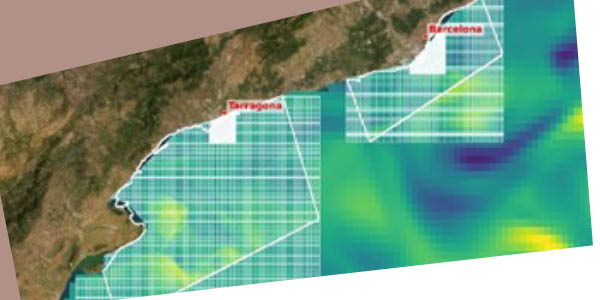 Researchers from the Polytechnic University of Catalonia have begun creating high-resolution coastal numerical grids to simulate marine litter transport between Barcelona and Tarragona. They assembled, on a 2.5 km regional grid, two 250 m coastal grids covering the coastlines of Tarragona and Barcelona, and two 70 m grids including detailed information on beaches and ports in both cities. The first results were presented at the workshop-conference marking the tenth anniversary of the Parcels Lagrangian tracking model. The presentation video is available here. |
 |
|
▶New scientific publication from the project!!! |
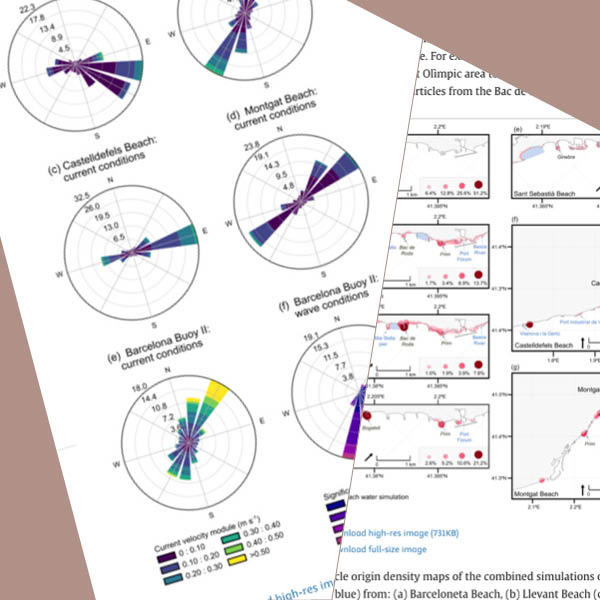
| “Tracing marine litter sources along the Barcelona coastline: Insights from observations and numerical modelling” published in Marine Pollution Bulletin: https://doi.org/10.1016/j.marpolbul.2025.118876. This article uses data on the concentration of floating marine litter in Barcelona’s coastal waters and performs retrospective simulations to trace their potential origin. In addition, a probabilistic stranding model is developed to represent coastal processes not simulated by the numerical model. It is observed that the coastal area of Barcelona is an accumulation zone for debris originating mainly from combined sewer overflows (rivers), but also from external sources (open sea). |
|
▶ Want to learn more or participate? |
Stay tuned for the next editions of the newsletter! Contact us at: hola@trap-poctefa.eu To subscribe or unsubscribe from our newsletter, please send an email with the subject “subscription” or “unsubscription” to hola@trap-poctefa.eu. |
 |